The MAONO PD100 XLR Podcast Microphone review centers on a straightforward dynamic mic kit for podcasting, streaming, voiceover, and vocal recording.
Its cardioid pickup, built-in pop filtering, and included desktop stand make it a practical starting point for creators with an XLR interface or mixer.
MAONO PD100 Review Summary
The quick verdict
800+ ratings
Read Amazon ReviewsMAONO PD100 XLR Podcast Microphone
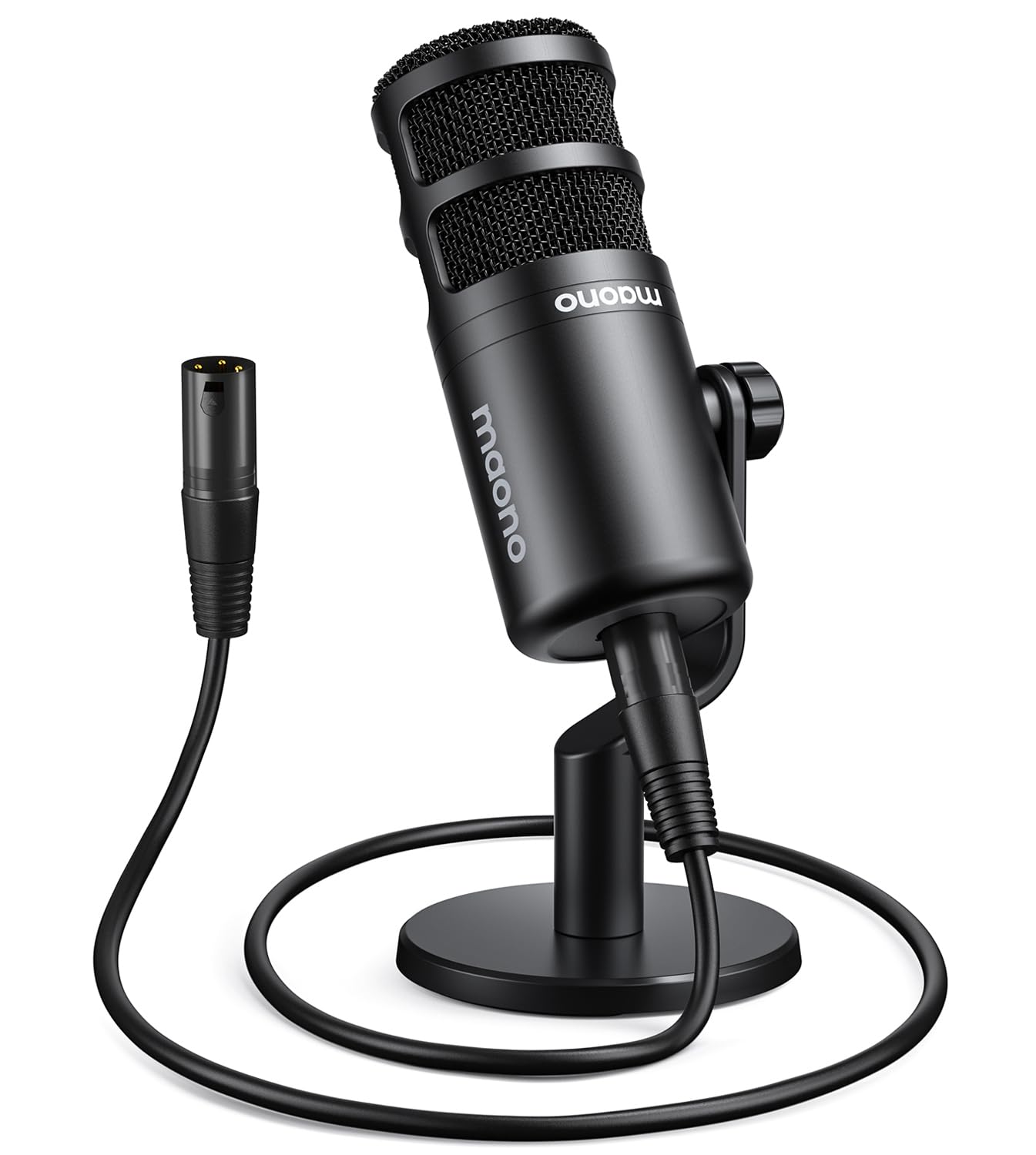
A compact XLR mic set for podcasters and creators who already use an audio interface or mixer and want a desk-ready setup.
- Dynamic XLR microphone designed for podcasting, vocal recording, streaming, voiceover, and content creation.
- Cardioid pickup pattern with a top-address speaking orientation.
- Built-in dynamic core and inner double-layer pop filter, intended to help attenuate plosive sounds.
- Frequency response range of 60 Hz to 14 kHz.

Pros
- The included desk stand, extender, base, and cable provide a usable starting kit for an XLR setup.
- Cardioid pickup is a sensible fit for a single speaker positioned in front of the mic.
Consider before buying
- An audio interface, mixer, or compatible sound card is needed to use the XLR connection.
- The supplied desk stand favors a fixed desktop position; buyers who need flexible placement should confirm their preferred stand arrangement before buying.
Read the full review summary
The PD100 combines a metal-bodied dynamic microphone with a desktop stand, height extender, round base, and XLR cable.
That bundle can simplify a first desk setup, while the cardioid pattern and inner double-layer pop filter are designed to focus on close voice recording and help attenuate plosive sounds.
It is best suited to someone who already has compatible XLR equipment and wants a compact, fixed-position mic for spoken content or vocals.
The microphone connects through XLR, so buyers should plan to pair it with an audio interface, mixer, or compatible sound card; the included accessories do not make it a standalone computer mic.
The buying factors
MAONO PD100 Scorecard
Editorial scores reflect listed features and buyer fit; they are not laboratory measurements or customer ratings.
Voice-focused design
A cardioid pattern and top-address pickup orientation are suited to close spoken-word recording.
Plosive management
The built-in inner double-layer pop filter is intended to attenuate plosive sounds.
Connection flexibility
XLR works with an interface or mixer, but the documented connection is not a direct USB option.
Included setup gear
The kit includes a desktop stand, extender, base, and XLR cable for a desk-based arrangement.
Desk stability and positioning
The circular metal base and extender support a stable desktop setup with some height adjustment.
Portable footprint
The compact microphone and desk-oriented components suit a small recording space, though the full stand setup is less packable than a handheld mic.
Key Features and Specifications of MAONO PD100
- Dynamic XLR microphone designed for podcasting, vocal recording, streaming, voiceover, and content creation.
- Cardioid pickup pattern with a top-address speaking orientation.
- Built-in dynamic core and inner double-layer pop filter, intended to help attenuate plosive sounds.
- Frequency response range of 60 Hz to 14 kHz.
- Metal body with a compact form and a desktop bracket, thick circular base, and 2.36-inch rod extender.
- Includes a 6.56-foot XLR cable and built-in 5/8-inch and 3/8-inch threads for mic stand compatibility.
Pros and Cons of MAONO PD100
Pros
- The included desk stand, extender, base, and cable provide a usable starting kit for an XLR setup.
- Cardioid pickup is a sensible fit for a single speaker positioned in front of the mic.
- The integrated pop filter addresses plosive sounds without requiring a separate filter in the listed kit.
- The metal construction and circular base are designed for a stable desktop arrangement.
Consider before buying
- An audio interface, mixer, or compatible sound card is needed to use the XLR connection.
- The supplied desk stand favors a fixed desktop position; buyers who need flexible placement should confirm their preferred stand arrangement before buying.
- The stated frequency response ends at 14 kHz, so creators prioritizing a broader documented range may want to compare specifications before choosing.
Who Should Buy MAONO PD100?
Good fit
Consider the PD100 if you are setting up a home podcast or streaming desk and already have an XLR interface or mixer.
Its included stand and cable reduce the number of basic accessories to source separately, while the cardioid pattern is intended to prioritize a speaker positioned at the mic.
It may also suit voiceover or vocal recording in a compact workspace where a desktop base is convenient.
Check that the stand height and placement bring the mic close enough for your preferred recording posture; the included extender adds 2.36 inches of height.
The built-in pop filter and dynamic design are useful ingredients for close voice work, but the result still depends on your interface, mic placement, room, and recording technique.
Confirm that your existing equipment has an XLR input and that the cable length fits your desk.
Who should skip it
Skip this setup if you need a mic that plugs directly into a computer over USB, or if you do not have an XLR interface, mixer, or compatible sound card. The PD100 is designed around an XLR connection.
Look elsewhere if your workflow depends on a handheld mic or a boom-arm position instead of a desktop base. Check whether your chosen stand and desk layout can place the mic where you need it.
MAONO PD100 Review: What Its Desk Kit Means for Your Setup
A voice-first pickup pattern
The PD100 uses a cardioid pattern and is meant to be addressed from the top. That directs the setup toward a speaker facing the microphone at close range, a common arrangement for solo podcasting and voiceover.
Keep the mic pointed toward your mouth and consider how its position relates to keyboard, room, or other nearby noise; the pattern describes pickup direction, not a guarantee of room isolation.
Pop filtering for spoken content
An inner double-layer pop filter is built into the microphone to help attenuate plosives. That can make the kit simpler for a first voice-recording setup, since a separate filter is not listed as a required component.
Speaking distance and angle still matter, so try a comfortable close position and listen for bursts on strong consonants before recording a full session.
XLR means planning the signal path
The microphone's XLR connection makes it a fit for an interface or mixer-based recording chain.
The included XLR cable helps connect the mic to that equipment, but buyers should confirm they have an appropriate input and enough desk-to-device cable reach.
If you are starting without audio gear, factor in the interface or mixer needed to complete the setup.
Desk placement and included hardware
The metal desktop bracket, thick circular base, and 2.36-inch extender are intended to keep the mic on the desk and bring it closer to the speaker.
Built-in 5/8-inch and 3/8-inch threads also give a route to compatible mic stands. Think through whether a base fits your available desk space and whether the included extender reaches a comfortable speaking height.
Alternatives to MAONO PD100
Multipurpose Dynamic Microphones alternative
12,000+ ratings
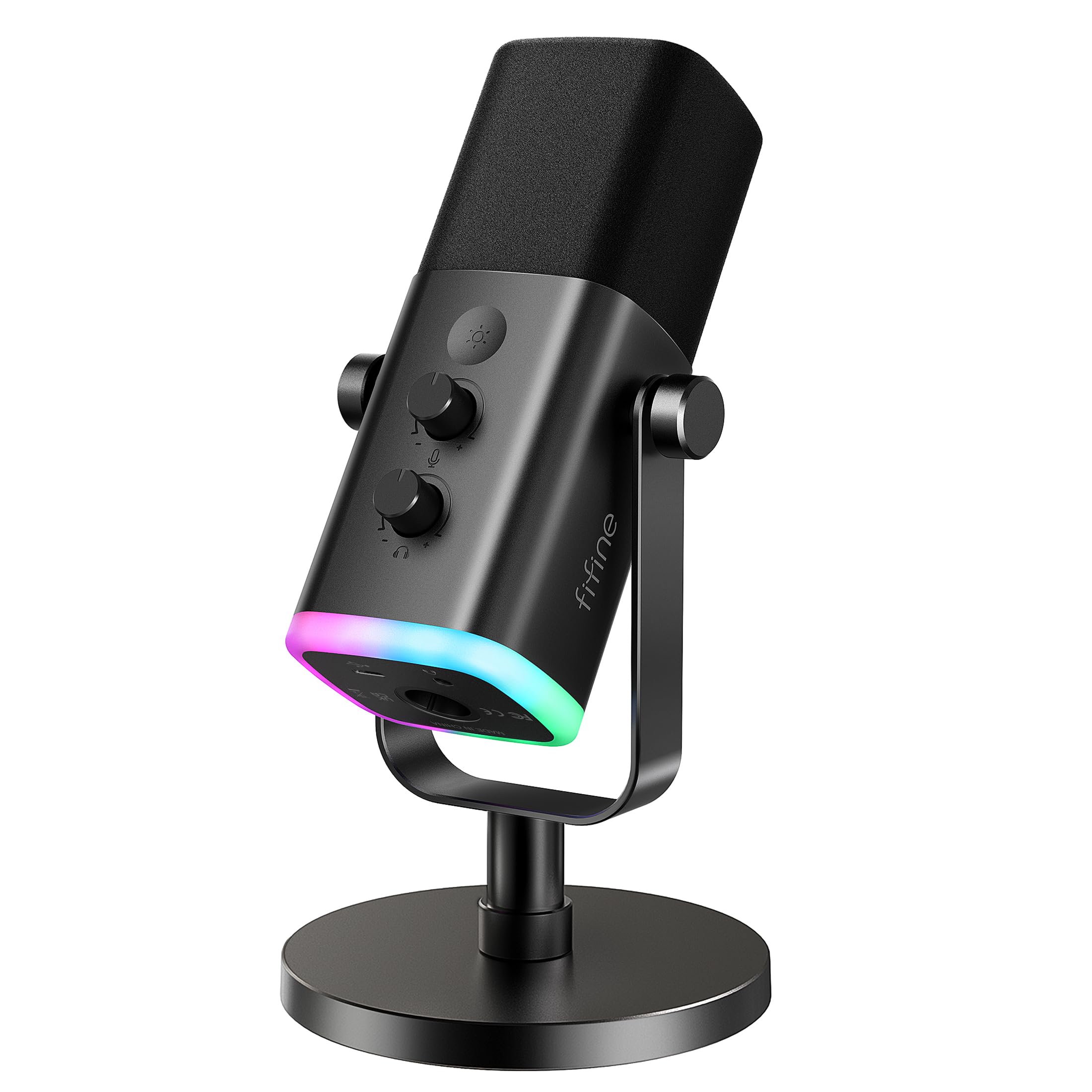
Read Amazon ReviewsFIFINE AmpliGame AM8 USB/XLR Dynamic Microphone
Choose the PD100 if you want its included XLR cable and desktop hardware for an interface-based setup.
Consider the AM8 if direct USB connection and its listed USB controls matter to your computer workflow, while accounting for its separate XLR cable requirement when using that connection.
- The FIFINE AM8 supports both USB and XLR.
- Its USB mode includes a mute control, headphone jack, gain control, and RGB lighting; those functions are inactive over XLR, and its XLR cable is not included.
- The MAONO PD100 uses an XLR connection and comes with a desk stand, extender, base, and XLR cable.
Multipurpose Dynamic Microphones alternative
600+ ratings
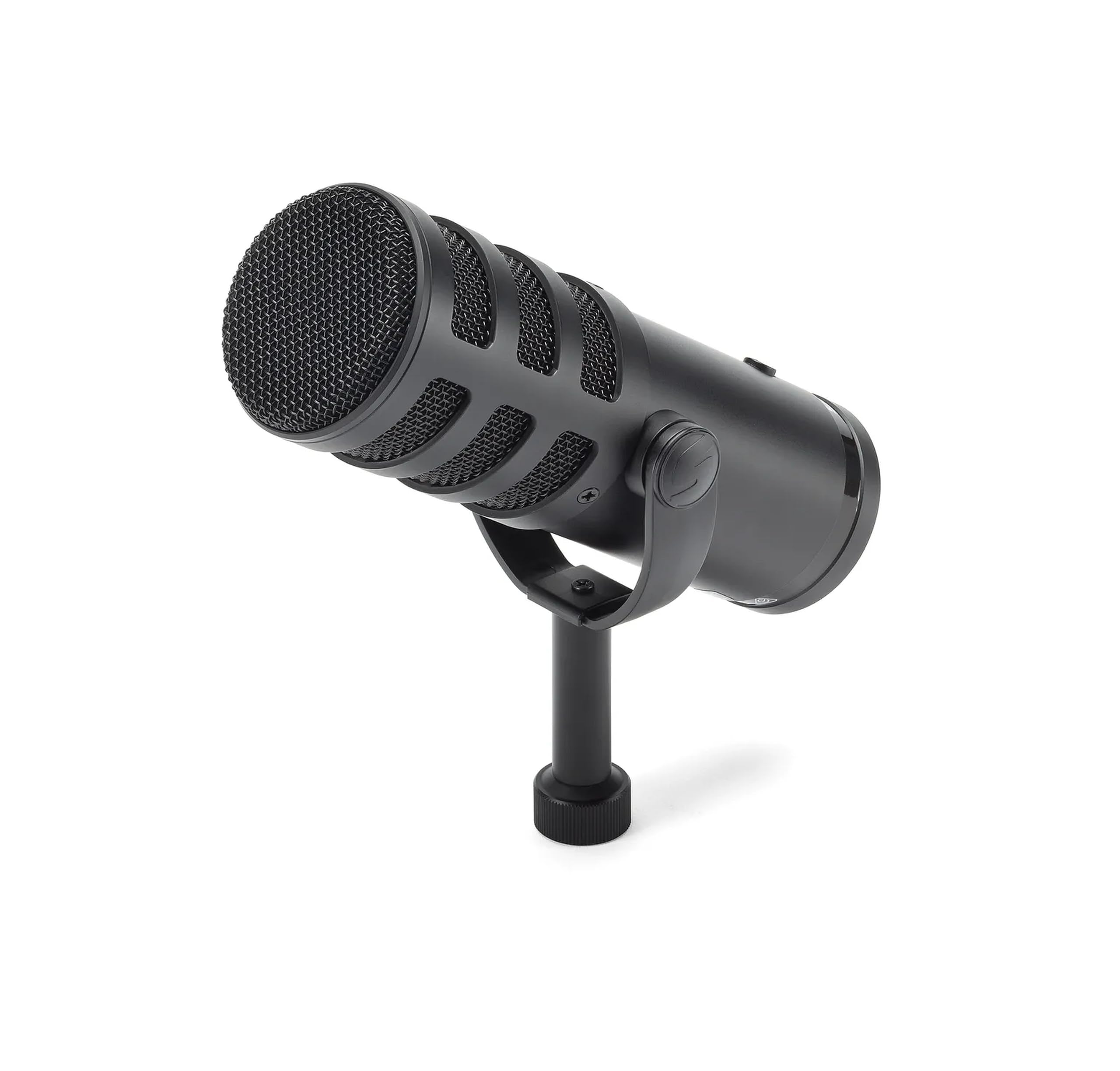
Read Amazon ReviewsSamson Q9U XLR/USB Dynamic Broadcast Microphone
The PD100 is the more desk-kit-oriented choice when you already have an XLR chain and want the listed base and cable.
Consider the Q9U if USB-C recording, headphone monitoring, or a mute switch are priorities and you prefer those controls built into the microphone.
- The Samson Q9U offers both XLR and USB-C connections, USB digital recording at 24-bit/96 kHz, zero-latency headphone monitoring, and an onboard mute switch.
- Its description also lists a cardioid pattern, internal shock mount, and dual-layer windscreen.
- The MAONO PD100 is an XLR-only design with a desktop stand and cable included.
Is MAONO PD100 Worth It?
The MAONO PD100 XLR Podcast Microphone is worth considering as a compact, voice-focused desk kit for creators who already record through an XLR interface or mixer.
The included cable, stand, base, and extender make its setup package useful for a basic home recording station.
Buy it if the XLR-only workflow and desktop placement match your needs. If you need direct computer connectivity or more built-in monitoring and control options, compare those requirements against alternatives before settling on this mic.
Your review at a glance
800+ ratings
Read Amazon ReviewsMAONO PD100 XLR Podcast Microphone
A compact XLR mic set for podcasters and creators who already use an audio interface or mixer and want a desk-ready setup.
- Dynamic XLR microphone designed for podcasting, vocal recording, streaming, voiceover, and content creation.
- Cardioid pickup pattern with a top-address speaking orientation.
- Built-in dynamic core and inner double-layer pop filter, intended to help attenuate plosive sounds.
- Frequency response range of 60 Hz to 14 kHz.